Marrakech has a hot semi-arid climate: very hot, dry summers (37-38 °C in the afternoon in July-August), winters that are mild by day (19-20 °C) but cool at night (6-7 °C), about 220 mm of rain a year and more than 3,200 hours of sunshine. Spring and autumn are the most pleasant seasons.
The four seasons
Winter (December to February)
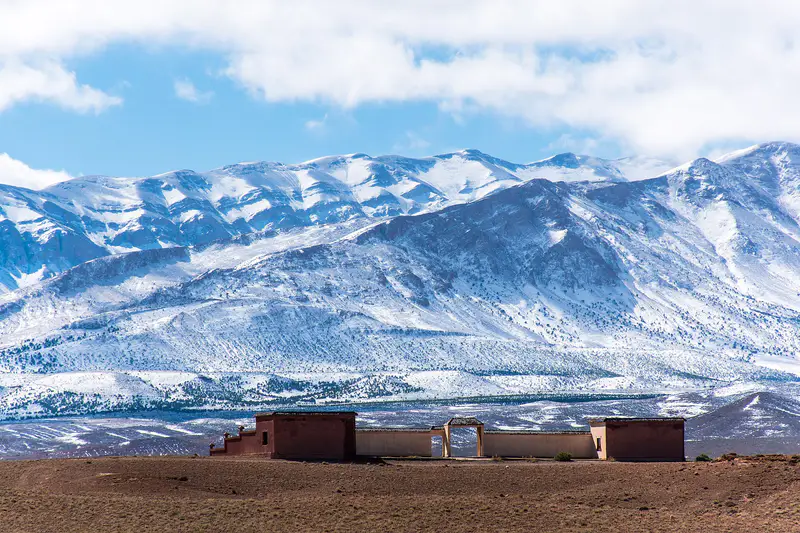
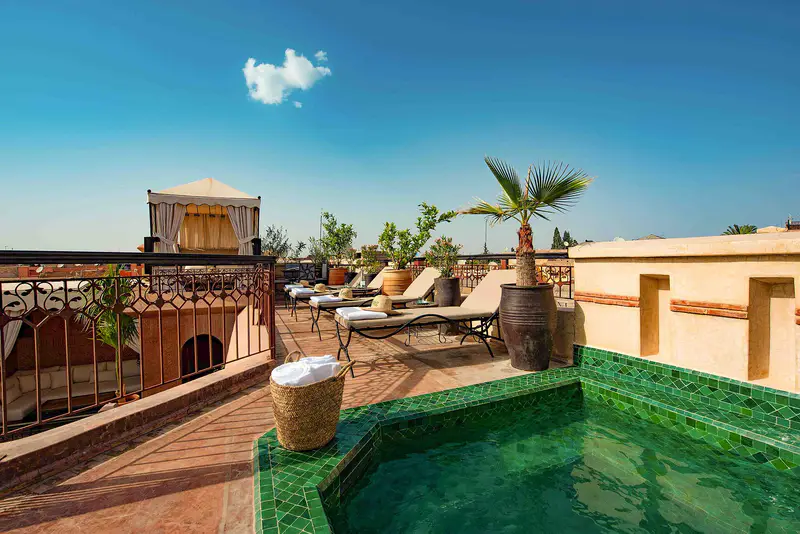
Sunny, mild days, cold nights and a few rainy spells. The High Atlas turns white and is visible from the city. Riads, rarely well heated, can feel chilly in the evening.
Spring (March to May)
The best season for many: 24-29 °C in the afternoon, green countryside and flowers. March is the wettest month, May already hot and dry.
Summer (June to August)
Intense dry heat, often above 40 °C during chergui spells. Rain is almost absent in the city, but storms break over the Atlas.
Autumn (September to November)
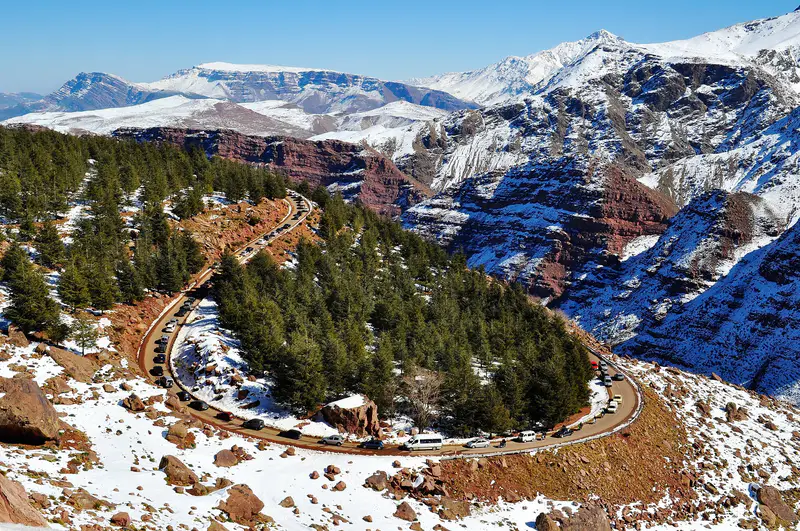
The heat eases gradually: September still hot, October ideal, November mild with rain returning and snow on the peaks.
Why this climate?
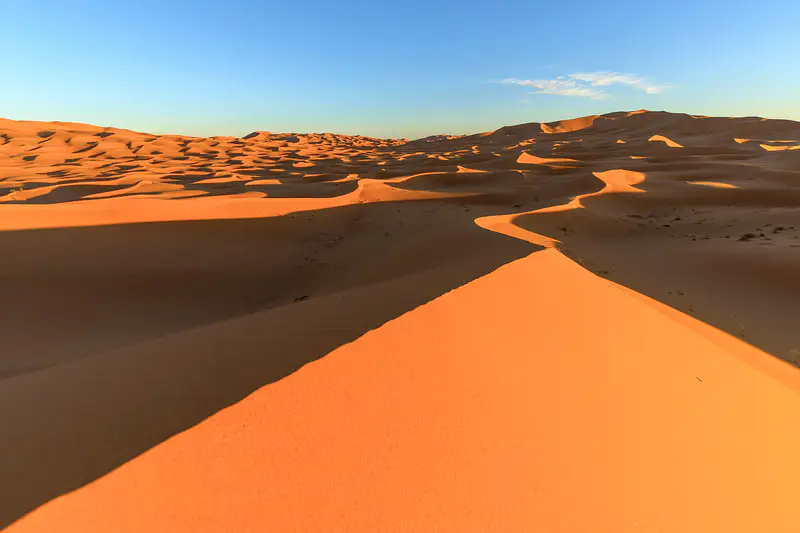
Marrakech sits at 466 m on the Haouz plain, 150 km from the ocean and at the foot of the High Atlas. Far from maritime influence, the city sees big swings between day and night and between summer and winter. The Atlas blocks some weather from the south and fuels summer storms; when wind from the Sahara crosses the mountains it warms further and brings the strongest heat.
Records and extremes
- Highest temperature: 49.6 °C (July).
- Lowest temperature: −3.6 °C (January).
- Wettest month: March (35 mm on average).
- Driest month: July (2 mm).
- Sunniest month: June (about 12 hours of sun a day).
And around Marrakech?
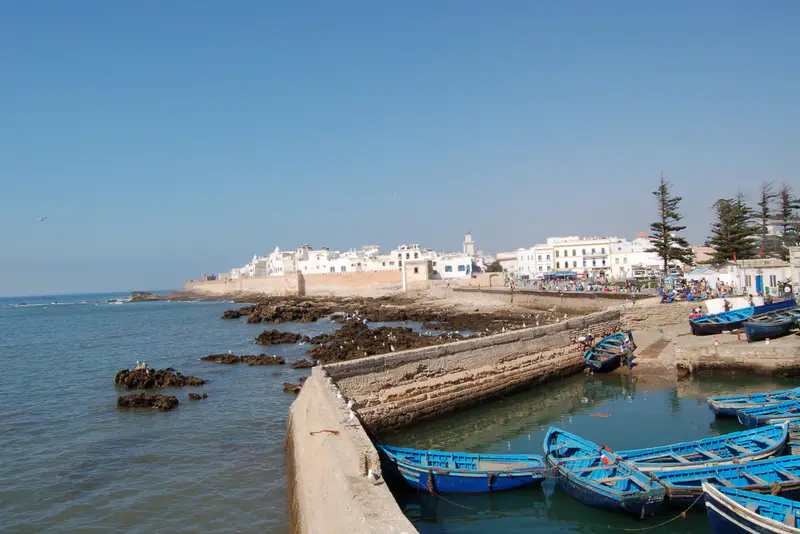
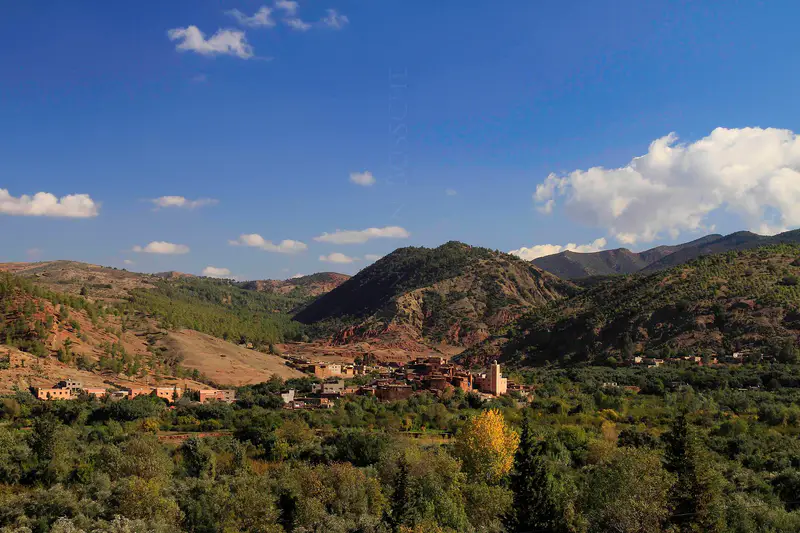
The climate changes fast with altitude and distance from the ocean: it is 6-10 °C cooler in the Ourika Valley, about 13 °C cooler at Oukaïmeden, and Essaouira stays between 18 and 23 °C all year thanks to the Atlantic.
Sources: 1991-2020 climate normals (WMO/NOAA) for the Marrakech-Menara station. See our methodology.