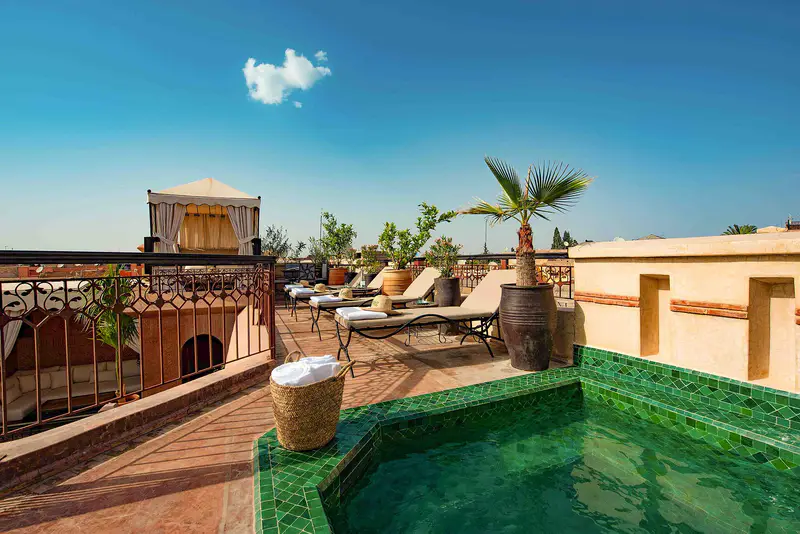
The chergui is a hot, very dry wind from the east and south-east, out of the Sahara. When it blows over Marrakech the temperature can jump 5-10 °C in a few hours and pass 45 °C in summer, with dusty air and humidity below 15%.
Where does the chergui come from?
The word comes from the Arabic sharq, east. The wind forms when high pressure settles over the Sahara and pushes hot air towards the Atlantic. Crossing the Atlas, the air sinks onto the Haouz plain and warms further as it compresses, which explains the sudden heat spikes seen in Marrakech.
When does it blow?
Mostly from June to September, but shorter spells happen in spring and autumn, turning a normal 26 °C day into 35 °C or more. The Marrakech-Menara station has recorded up to 49.6 °C. Our site flags a chergui when the wind is from the east with very low humidity and temperatures well above normal, in the “Good to know today” section.
Protecting yourself from the heat
- Drink regularly before you feel thirsty: 2-3 litres a day, more when walking.
- Avoid direct sun between noon and 5 pm; sightsee early and in the evening.
- Wear loose, light-coloured clothes, a hat and sunglasses, and protect your skin (UV up to 11).
- A damp scarf on the back of the neck cools you down effectively.
- Headache, nausea, dizziness or very hot skin: get somewhere cool, drink and see a doctor if it persists.
Where to find cool air
Covered souk alleys, museums and thick-walled palaces stay cooler. Pools and hammams are good refuges. Day trips: Essaouira (often 15 °C cooler), the Ourika Valley and Oukaïmeden up in the mountains.